Abilify (aripiprazole): A Simple Language Complete Guide
This article will help you make a clear and confident decision about Abilify—what it is used for, how it works, how to take it, possible side effects, and when to contact your doctor urgently.
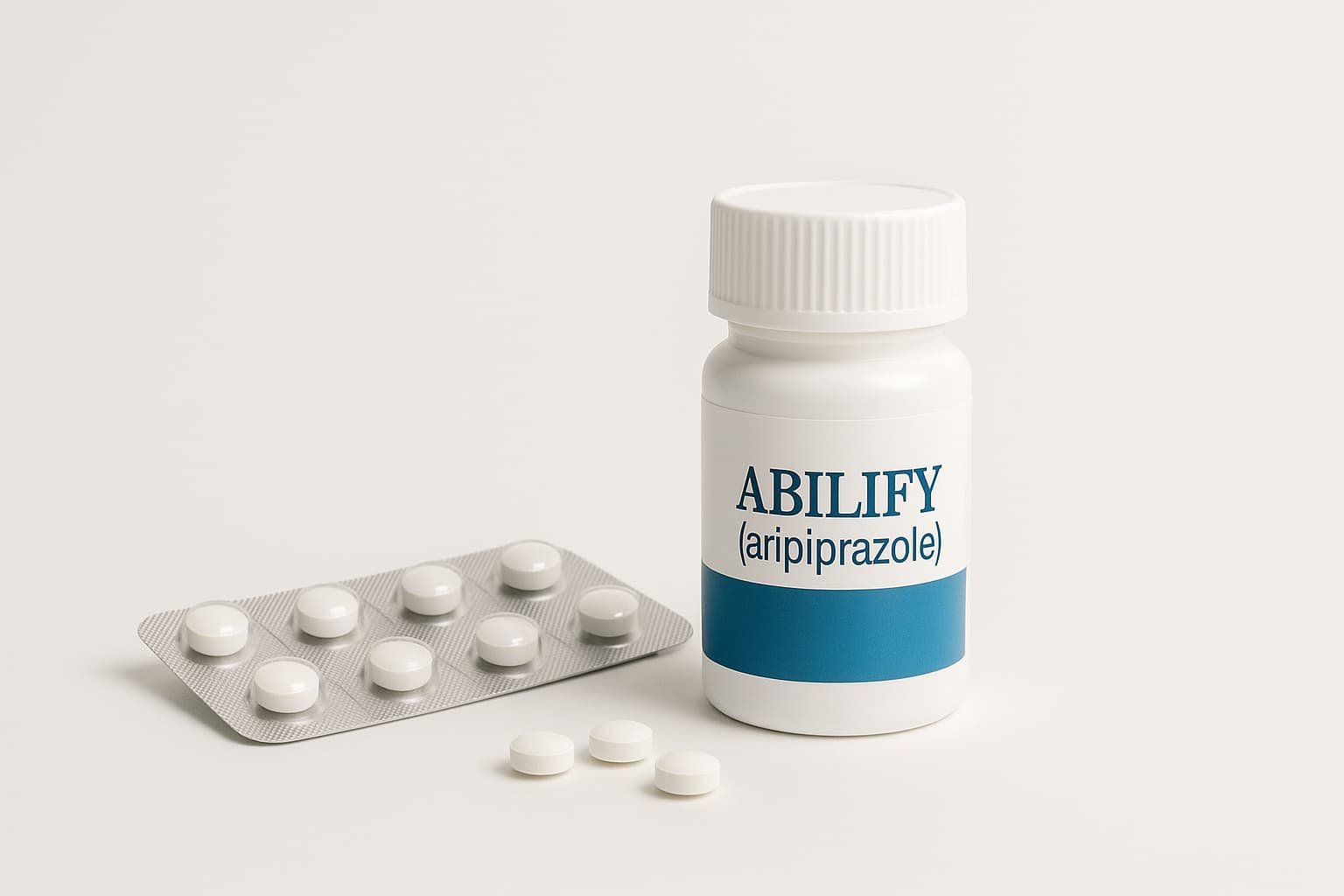
What is Abilify?
Abilify (aripiprazole) is a prescription medicine from the atypical antipsychotic group. Usually, it is taken as an oral tablet. Along with the brand, generic aripiprazole is also available in the market.
Schizophrenia: For adults and teenagers aged 13+
Major Depressive Disorder (MDD): In adults, as an adjunct with other antidepressants
Bipolar I disorder: Manic or mixed episodes—for adults and children aged 10+
Autism spectrum disorder: To reduce irritability in children aged 6+
Tourette syndrome: For children aged 6+
💡 Off-label: In some cases, doctors may use it off-label for anxiety, but it is not FDA-approved for anxiety.
Though its exact mechanism of action is not fully known, Abilify works on dopamine and serotonin receptors like a stabilizer—sometimes increasing, sometimes decreasing their activity—so that mood, thoughts, and behavior gradually come into balance.
Half-life is about ~75 hours, so it stays in the body for a long time.
If a dose is missed, levels don’t fluctuate sharply, but it’s best to take it at the same time daily.
(Half-life means the time it takes for a drug’s amount in the body to reduce by half.)
Usually once daily
With or without food—both are fine
Do not chew/break/crush the tablet—swallow it whole
Missed dose: Take it when you remember; if it’s close to the next dose, skip it
Results: It may take several weeks for symptoms to improve
⚠️ The dose given by your doctor is final. Do not increase/decrease on your own.
Sleepiness or insomnia
Anxiety, headache, dizziness, fatigue
Indigestion/constipation/nausea/vomiting
Blurred vision, upper respiratory infection
Weight gain—in some cases
These often reduce in a few days to weeks. If they persist or worsen, inform your doctor.
Serious side effects (do not ignore)
Contact your doctor immediately or seek emergency help if you notice:
Metabolic changes: high blood sugar, high triglyceride/cholesterol, rapid weight gain
Impulse-control problems: sudden gambling/shopping/binge eating/sexual urges
Movement disorders: tardive dyskinesia, akathisia, tremor
Low white blood cells → infection risk
Orthostatic hypotension → dizziness/fainting when standing
Seizures
Body temperature regulation problems, difficulty swallowing
Disturbance in thinking/coordination
Rare but serious: Neuroleptic Malignant Syndrome (NMS)
Though rare, it can be life-threatening. Symptoms:
High fever, severe muscle rigidity
Altered mental status: confusion, drowsiness, extreme restlessness
Autonomic signs: rapid heartbeat, unstable BP, excessive sweating, breathing difficulty
CK (CPK) elevation, risk of rhabdomyolysis
👉 Do not delay—stop the medicine (with medical advice) and seek emergency treatment. Hospital care may include hydration, cooling, monitoring; in severe cases, bromocriptine or dantrolene may be used.
Suicidal thoughts/behavior: Risk may increase in people ≤24 years, especially when starting for MDD as adjunct therapy.
Dementia-related psychosis (65+): Increases risk of stroke and death in elderly dementia patients—Abilify should not be used for these patients.
🙏 If you feel depressed, think of harming yourself, or have suicidal thoughts—immediately contact a loved one, local emergency services, or a trusted helpline, and stay in a safe place.
Who should be cautious / avoid taking it
Talk to your doctor if you—
Have heart problems or take blood pressure medicines (metoprolol, prazosin) → may worsen orthostatic hypotension
Have diabetes or metabolic risk → regular monitoring of glucose, lipids, weight needed
Have seizure disorder
Have history of low white blood cells
Had an allergic reaction to Abilify or its ingredients
Drug interactions (what it should not mix with)
Fluoxetine/Paroxetine (strong CYP2D6 inhibitors) → may increase Abilify level
Carbamazepine (enzyme inducer) → may decrease Abilify level, reducing effect
Benzodiazepines → increased sedation
Metoprolol/Prazosin → may increase risk of hypotension
Alcohol → worsens sleepiness/dizziness/nausea → better to avoid
 Always inform your doctor/pharmacist about your prescriptions, OTC meds, vitamins, and herbs.
Pregnancy & breastfeeding
Pregnancy: No large, definitive human studies. Exposure in the third trimester may cause newborn extrapyramidal symptoms (tremor, low tone, feeding problems, etc.). Usually resolves in hours–days, but sometimes hospital monitoring is needed.
Breastfeeding: May pass into breast milk; reports of reduced milk supply; may affect infant weight gain.
👉 If Abilify is needed during these times, discuss risks and benefits in detail with your doctor.
Overdose effects
Sleepiness/coma, abnormal heart rhythm/HR/BP, aggression/confusion, seizure/tremor, liver changes, vomiting, etc.
👉 Go to the emergency department / call local emergency number. Do not try to self-manage.
Monitoring checklist (your to-do list)
Weight, waist circumference
Fasting glucose/HbA1c, lipids
Movement symptoms: tremor, akathisia, TD
Blood pressure/orthostatic symptoms
Mood/behavior changes—especially impulse control (gambling, shopping, binge eating, sexual urges)
Screening for suicidal thoughts in young people
Doctors usually check these frequently at first, then at regular intervals.
Additional points about use
Long-term use: If effective and tolerated, many people continue long-term
Do not stop suddenly: Safer to taper—sudden stopping may cause lightheadedness, anxiety, nausea, palpitations, sweating, flu-like symptoms, headache
Misuse: Not usually addictive, but taking outside prescription can cause problems. Do not share medicine.
Storage: At room temperature, dry place, out of children’s reach.
Cost hints
Generic aripiprazole is usually cheaper than brand Abilify
Both brand and generic have the same active ingredient—switch only under doctor’s guidance
When to urgently see a doctor (Red flags)
Very high fever, muscle stiffness, confusion → possible NMS
New/worsening suicidal thoughts, abnormal behavior
Seizure, fainting, severe dizziness
Uncontrollable movements or strange face/tongue motions (TD)
Severe rash/swelling/breathing difficulty (allergic reaction)
Final word
Abilify (aripiprazole) can bring big improvements in many lives—when used for the right condition, at the right dose, with proper monitoring. Pay attention to your body and mind’s signals, keep regular follow-ups, and ask your doctor/pharmacist if you have questions.
📌 This article is educational and not a substitute for medical advice. Make personal treatment decisions with your doctor.